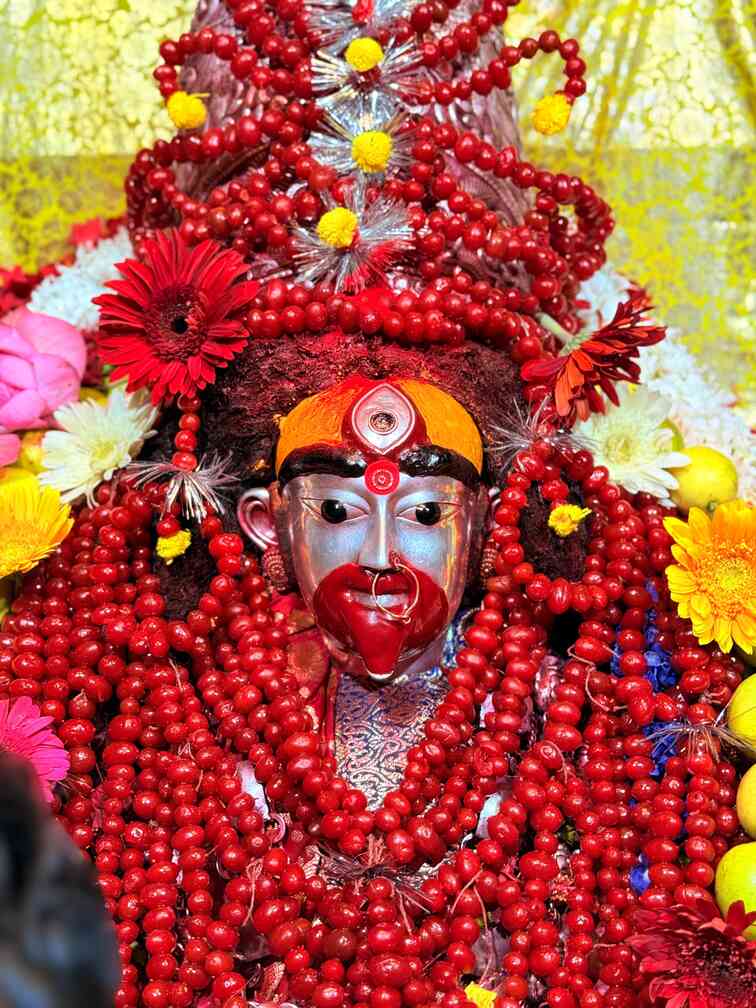
Tarapith is a pilgrimage town in the Rampurhat subdivision of Birbhum district, West Bengal. The shrine is dedicated to Maa Tara, a powerful form of the Divine Mother revered in Shakta and Tantric traditions. The temple and the adjoining Maha Smashan have made Tarapith one of Bengal’s most distinctive centres of devotion.
WHY IS TARAPITH CALLED A PEETHA?
A widely cherished local tradition identifies Tarapith with the place where a part of Sati’s eye—often described as the pupil or the third eye—fell during the cosmic grief of Lord Shiva. In this telling, the name Tara is connected with the eye and with the Mother who protects and carries devotees across suffering. Many devotees therefore honour Tarapith as a Shakti Peetha.
It is important to understand that this is a sacred tradition, not an uncontested archaeological date. Modern scholarship notes that the textual basis for identifying Tarapith among the canonical Shakti Peethas is debated. Some traditions instead describe it as a Siddha Peetha, a place associated with the spiritual accomplishments of revered practitioners such as the sage Vasistha and the saint Bamakhepa. These accounts are part of the living religious memory of the shrine.
A LIVING CENTRE OF TARA WORSHIP
The West Bengal Tourism Department describes Tarapith as a major tantric temple near the Dwarka River and records the local legends associated with Maa Tara. The temple’s importance is not limited to a single origin story. Daily worship, offerings, festivals, the presence of the cremation ground and generations of sadhakas have all shaped the identity of this sacred town.
For pilgrims, Tarapith is above all a place of refuge and maternal grace. The fierce form of Tara is also understood as the compassionate Mother who protects her children. The many stories told here should be read with respect for both faith and historical evidence: belief explains the spiritual meaning of the place, while inscriptions, scholarship and official records help us understand the temple’s documented past.
HISTORICAL NOTE
The exact antiquity of the shrine is not established by one universally accepted record. Sources differ in how they describe the early temple and the present structure. The later documented history of the standing temple is discussed in our article on the temple through the centuries.
SOURCES & FURTHER READING
1. West Bengal Tourism Department, “Tarapith”: https://wbtourism.gov.in/topDestination/details1?id=63d8d4236327ed072c056a2c&template_id=1
2. Oxford Journal of Hindu Studies, “From Bauddha Desa to Sakta Pitha: Re/Locating the Hindu Goddess Tara”: https://academic.oup.com/jhs/article/17/2/175/7635536
3. De Gruyter, “6 Shakti-Pithas of West Bengal: Seven Case Studies”: https://www.degruyterbrill.com/document/doi/10.1515/9783111243979-006/pdf
Tarapith: The Sacred Land of Maa Tara
A researched introduction to Tarapith, Maa Tara, the Shakti Peetha tradition and the historical questions around the shrine.