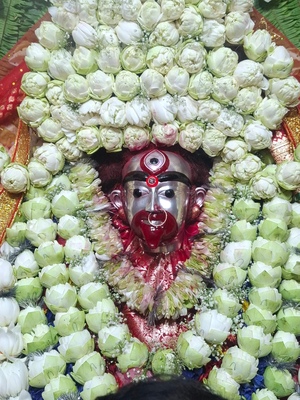
One of the best-known sacred narratives associated with Tarapith concerns Maharishi Vasistha, the revered sage of Hindu tradition. Local accounts remember him as a devoted worshipper of Maa Tara who sought a direct vision of the Divine Mother through intense spiritual practice.
THE TRADITIONAL ACCOUNT
In the Tarapith telling, Vasistha’s devotion led him to seek deeper instruction in the worship of Tara. Some versions say that Brahma directed him towards a form of Tantric worship connected with Mahachina. After receiving instruction, the sage is said to have continued his sadhana at the sacred ground near the Dwarka River. The tradition associates his spiritual accomplishment with the panchamundi asana, a seat described in local sacred lore as being made from five skulls.
The story is not identical in every retelling. Some accounts place the decisive practice in the cremation ground; others emphasise the sage’s journey and the instruction he received before returning to the Tara shrine. The central devotional message remains the same: perseverance, humility and disciplined worship lead the seeker towards the grace of the Mother.
LEGEND AND HISTORICAL EVIDENCE
Vasistha is a figure of ancient Hindu sacred literature, but the specific claim that he performed sadhana at the present Tarapith site belongs to the shrine’s religious tradition. It should not be presented as a dated historical event supported by contemporary inscriptions. A recent academic study of Tara traditions in Bengal discusses the Vasistha narrative and points out that the textual evidence linking the site to particular ancient sources is complex and sometimes disputed.
WHY THE STORY MATTERS AT TARAPITH
The Vasistha legend helps explain why Tarapith is revered not only as a temple town but also as a Siddha Peetha—a place associated with spiritual attainment. It connects the temple with the nearby Maha Smashan, where generations of Tantric practitioners have sought spiritual insight. For devotees, the story is a reminder that the Mother is approached through sincerity rather than outward display.
The legend continues to be retold by pilgrims, priests and spiritual teachers. Its value lies in the devotional world it has shaped, even as historians distinguish sacred memory from verifiable chronology.
SOURCES & FURTHER READING
1. Oxford Journal of Hindu Studies, “From Bauddha Desa to Sakta Pitha: Re/Locating the Hindu Goddess Tara”: https://academic.oup.com/jhs/article/17/2/175/7635536
2. West Bengal Tourism Department, “Tarapith”: https://wbtourism.gov.in/topDestination/details1?id=63d8d4236327ed072c056a2c&template_id=1
3. “The Maha Shmashan,” Maa Tara Pith Temple: https://tarapith.org/the-maha-shmashan/
The Legend of Sage Vasistha and Maa Tara
Explore the traditional Vasistha legend associated with Tara worship at Tarapith, with historical context and scholarly notes.