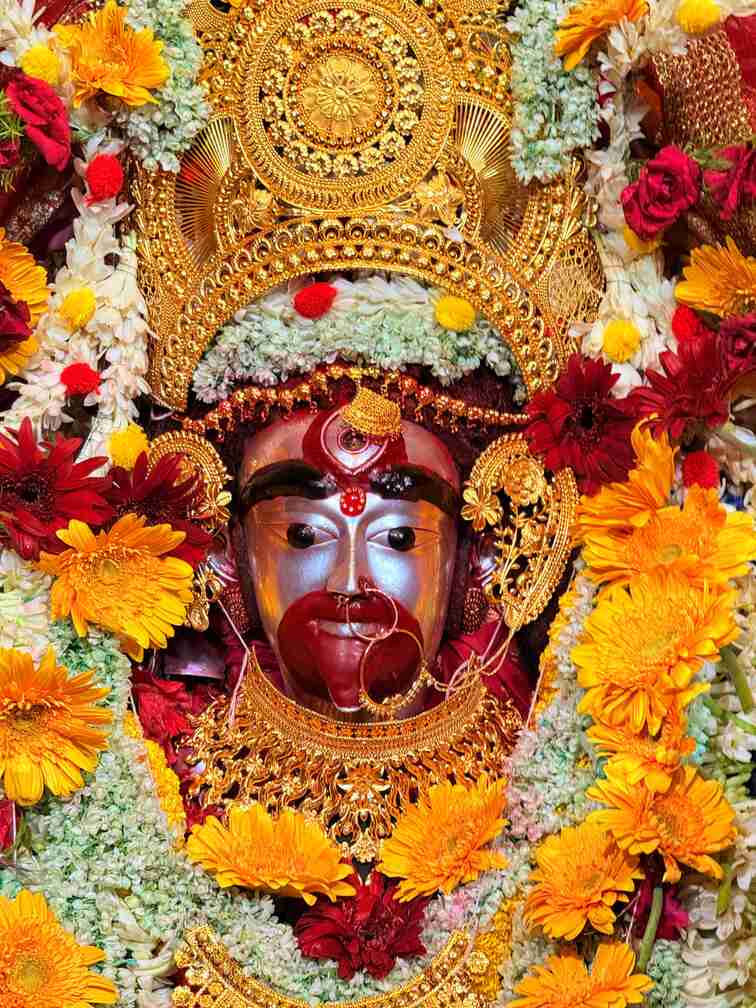
Sadhak Bamakhepa is one of the most revered figures in the modern religious history of Tarapith. Remembered as a passionate devotee of Maa Tara, he became closely associated with the temple and the adjoining Maha Smashan. His life helped make Tarapith widely known as a centre of Shakta-Tantric devotion.
Who Was Bamakhepa?
Bamakhepa was born as Bamacharan Chattopadhyay in Atla village in Birbhum in 1837, according to several biographical and scholarly accounts. The name “Khepa” is commonly explained as “mad” or “absorbed,” referring to his intense and unconventional devotion to the Mother. Rather than measuring spiritual life by social status or outward respectability, stories about him emphasise his single-minded love for Tara.
The Mother As His Refuge
Traditions about Bamakhepa describe his close relationship with Maa Tara as that of a child with his mother. He is associated with the Maha Smashan, where he undertook spiritual practice and where devotees remember his presence. Stories of his unusual conduct, his disregard for worldly prestige and his complete dependence on the Mother became part of Tarapith’s devotional memory.
Some popular accounts tell of a dispute over his taking food before the formal offering and a dream in which the Mother instructed that he be fed first. Such stories are devotional narratives and should be presented as local tradition, not as independently verified administrative records. Their significance lies in the way devotees express Bamakhepa’s intimate relationship with Tara.
Historical Influence
Academic studies describe Bamakhepa as a nineteenth-century Tantric practitioner whose reputation contributed greatly to Tarapith’s popularity. Research on the temple’s history notes that the increase in donations and interest in the shrine was connected with the fame of Vamakhepa. Contemporary scholarship also discusses his role in shaping the sacred identity of the Maha Smashan and the wider Tara tradition in Bengal.
A Legacy Of Devotion
Bamakhepa’s story remains alive through shrines, oral narratives, devotional songs and the memories of pilgrims. For devotees, he represents an uncompromising love for Maa Tara. For historians, his life offers an important window into the religious culture of nineteenth-century Bengal and the growth of Tarapith as a major pilgrimage centre.
▤ Sources & Further Reading
- “Anthropology of the Profane,” Religions, 2025: https://www.mdpi.com/2077-1444/16/2/227
- University of Oxford Research Archive, “Hindu Pilgrimage, with Particular Reference to West Bengal, India,” section “The Temple”: https://ora.ox.ac.uk/objects/uuid:690a2734-2493-4e1d-b551-d391bec4b0a5
- Oxford Journal of Hindu Studies, “From Bauddha Desa to Sakta Pitha: Re/Locating the Hindu Goddess Tara”: https://academic.oup.com/jhs/article/17/2/175/7635536
- Shree Peetha Nilaya, “Sri Bhamakhepa, Tarapith”: https://shreepeethanilaya.org/ashram-shree-peetha-nilaya/explore/saints-of-india-museum/
 03 Nov 2026Tarapith Maha Smashan: The Sacred Ground of Sadhana
 03 Nov 2026The History of Tarapith Temple Through the Centuries
 03 Nov 2026Why Maa Tara Is Shown Nursing Lord Shiva
 03 Nov 2026The Legend of Sage Vasistha and Maa Tara
 03 Nov 2026Tarapith: The Sacred Land of Maa Tara